
To look at the famous figure of Thomas Mapfumo, it is important to take a short look back at the context of Rhodesia at the time, the name, let us recall, of present-day Zimbabwe in the not so distant days of the colonies.

A turbulent geopolitical context
The term Chimurenga generally designates the Shona and Ndebele revolts of the late 19th century against the grip of the British South Africa Company (BSAC) in Southern Rhodesia. It was reclaimed and given a new meaning by the national liberation movements, from 1964 to 1979, which claimed to be the “second Chimurenga”. Chimurenga means “revolt” in Shona.
Songs in Shona, in Ndebele, or in English from this period are called Chimurenga songs. They are songs of independence, calling for revolt against the white power of Ian Smith’s government. These songs are a source for the history of the Zimbabwean war of national liberation and for the construction of nationalism, and they also have an undeniable literary value.

Song was an important vehicle for recruitment and for spreading information during the war of national liberation (Liberation Struggle), for both parties that led the fight: ZANU (Zimbabwe African National Union) and ZAPU (Zimbabwe African People’s Union). These two parties, one predominantly Shona, the other predominantly Ndebele, each had an armed wing, respectively ZANLA (Zimbabwe African National Liberation Army) and ZIPRA (Zimbabwe People’s Revolutionary Army). In the parties as in the armed wings, song was a convenient means of group cohesion and of uniting identities while carrying political protest. Sometimes seemingly harmless, sometimes explicitly Marxist, the songs cover a great variety of genres (war songs, songs calling on the ancestors, laments…) and are sometimes multilingual.

Chimurenga as a musical style
Performed at gathering evenings in the villages, the pungwe, these songs aimed just as much to enlist new recruits, to explain the revolutionary message to villagers, to popularise the socialist vocabulary in use in the bush, and to gather a community around one refrain.
The propaganda of Ian Smith‘s Rhodesian government always aimed to discredit ZANU and ZAPU, through the press, the airwaves or by dropping hundreds of leaflets from the air. Song then served as counter-propaganda, aiming to promote socialism and above all to defend themselves before the people against the charge of being terrorists – as can be seen in some Rhodesian flyers displaying terse formulas such as: “socialist = terrorism”.
Often passed on by word of mouth, they were particularly volatile and so escaped censorship. Learned at night vigils, from activists or soldiers, they then circulated, taken up and even reinterpreted by successive singers, while sometimes passing fleetingly on the radio, with no precise data supplied on their real audience on the airwaves. Neighbouring radios broadcast news of the guerrilla war and songs from advance posts in Mozambique, for example, with the help of FRELIMO (Frente de Libertação de Moçambique – Mozambique Liberation Front). It is possible that famous tunes may have passed through the Rhodesian Broadcasting Corporation, possibly without the lyrics, during the “African Service” slot that broadcast in Shona and Ndebele.
Exceptionally, some songs are followed by an author’s name, like “Zimbabwe Land of Hope”, by J. J. M. Ndlovu.
This is, however, an extremely small category, since the vast majority of songs remain anonymous. Party cadres took part collectively in composing the songs, before passing them on to the crowds at the vigils, who then made them their own: the notion of author is no longer really relevant here, so strong is the interrelation between producer, receiver and performer. Likewise, the categories of “elite” and “popular” fail to account for these cultural practices. Conceived and created by several members of political parties, in clandestinity, the texts and tunes were then reshaped by the audience, which in turn became producer and creator.
A particularly representative example of the immediately pragmatic use of song is “Nzira dzemaSoja, dzokuzvibata nadzo/Code of conduct for soldiers”, which sets out a real code of conduct learned by heart by young recruits, notably in the military camps near the border, in Mozambique or Botswana. The song, addressed directly to the soldier, forbids him to pillage the villages he passes through, to rape women, to take other people’s property, to torture and to tolerate prostitution. On the other hand, he is advised to explain the socialist vocabulary to the masses, to make the party’s policy understood, and to give land back to expropriated peasants. The text closes with a reference to Mao, who is said to have laid down these principles himself.
The songs evoke a “socialist international” stretching from Mao’s China to Sékou Touré’s Guinea and Julius Nyerere’s Tanzania, both frequently cited.
On the other hand, these songs aim to establish a gallery of national figures, examples for activists, soldiers and villagers. The founding “ancestors” of the first Chimurenga of the late 19th century are regularly summoned in the songs, such as the mediums Kaguvi and Nehanda, the chiefs Lobengula and Mapondera. Invoked as forerunners of the nationalist struggle, they are regarded as helpers in the war of national liberation.
Many songs thus ask for Nehanda’s protection on returning to the country, or to strengthen courage on the battlefield.
Chimurenga on the airwaves
Some Chimurenga songs were performed by artists recognised on the international scene, and even released by the record industry. This was the case for some works by Thomas Mapfumo, nicknamed “the Lion of Zimbabwe”, who dared to defy Rhodesian censorship by performing songs expressly recognised as belonging to the Chimurenga songs repertoire. Although a minority channel, this mode of distribution had a decisive impact on the people. Mapfumo performed in Salisbury’s dance halls, such as the Mushandara Pamwe, and enjoyed great popular success. He explained that he sang these songs of struggle to “encourage the guys who were in the bush”.
Tony Rivet, of the Teal Recording Company, states that he changed some of Thomas Mapfumo’s words to escape censorship, thus creating an alternative language, nevertheless understood by the guerrillas. The song quickly became a vehicle of propaganda in the opposing camps.
Thomas Mapfumo recorded a song called “Bhutsu Mutandarika”, translated as “Clumsy soldiers boots”. The song was used by the Rhodesian army, which played it from its helicopters to mock the soldiers of the Patriotic Front, who of course did not have the same logistical means as the Rhodesian army and had to cover long distances on foot, across fields. The irony is that Thomas Mapfumo had written the text to mock those very Rhodesian soldiers, with the odd result that both camps took the song as their own, each interpreting it in the opposite way. This particularly comical example is revealing and lets us better grasp the political complexity of Zimbabwe in the 1970s.
Thomas Mapfumo’s childhood
Thomas Tafirenyika “Mukanya” Mapfumo was born in Marondera, Zimbabwe, on 2 July 1945. In his early childhood, he lived in the same town with his grandparents, who were fervent musicians in the village. They passed on to him their taste and interest in music and traditional instruments (ngoma, hosho and mbira). Without his knowing it, these first innocent steps would shape his future musical career and earn him worldwide fame. His grandmother insisted from a very young age on taking him to some of the beer parties where she was invited to play and sing. Shona music is participatory music. Unlike Western music, where a few musicians perform before a large audience, the Shona concept is one in which each member takes part in his or her own measure. The young Mapfumo learned by playing and singing with the traditional masters.

He thus continued to live his early years in Marondera, split between his grandparents’ music and the traditional occupations of a village child his age. Thomas did what all young people in rural areas do: herding cattle and goats, helping the grandparents in the fields, doing household chores and all the activities that make village life an unforgettable experience. His peaceful country childhood was upended when his parents summoned him to come and live with them in Harare.
“I went to Salisbury after finishing what was then called Sub A. I was going to live with my parents.”
Sub-A, short for sub-standard A in the Anglo-Saxon school system, corresponded to the first year of formal schooling. At the age of ten, he therefore moved to Salisbury (the former name of Harare, the current capital of Zimbabwe). He lived in Mbare, a small neighbourhood on the outskirts, with his parents who worked in town.
Unlike village life, he was now exposed to radio and television, media he had not had access to in the village. Thanks to these media, Mapfumo was exposed to other sounds. He could listen to music from South Africa, Zaire, the United States, the United Kingdom and many other parts of the world. Very soon, he had a list of favourite regional and international musicians: Franco, Miriam Makeba, Hugh Masekela, Bing Crosby, Frank Sinatra and many others…
After school, Mapfumo spent time rehearsing covers of his favourite musicians. He particularly idolised Nat King Cole and Elvis Presley. This focus would push him to launch a musical career at a young age. At the age of 16, he began his musical career with a group, “The Cyclones”. Early in his career, with groups like the Springfields and the Cosmic Dots, he was content to cover songs by Elvis Presley and Otis Redding.
After finishing school, Mapfumo began playing guitar at the Mutanga nightclub in Highfields, a Salisbury township. Mutanga was probably “the first nightclub owned by a black Zimbabwean”. Mapfumo and his group, the Springfields, played only simple covers of Western music – the Beatles, the Rolling Stones – and occasionally rumba.
As there were few places where black bands could play, the nightclub scene in Salisbury was intensely competitive.
“We were competing with a rumba band called Lipopo Jazz that had a guitarist with three fingers but who was so good…”
Mapfumo does not remember the name of the Congolese musician, but some suggest it might have been Franco Luambo.
To beat the competition, Mapfumo was always looking for good musicians – artists who could improve the band’s sound. That is how he secured the services of Manu Kambani, one of Zimbabwe’s most agile guitarists, whom some consider the country’s Jimi Hendrix, in a group called Sound Effects. “We taught him to play rumba.”
Mapfumo took his music seriously. He was now trying to be a rock star. It so happened that in Harare (then Salisbury), an annual contest for the best rock-and-roll band was held. Thomas and his friends always took part.
It should be known that at the time, Mbare was a black ghetto but also a hub of protest movements against the segregationist colonial regime. This neighbourhood exposed Mapfumo very early to police brutality and the injustices of the colonial system. At these contests, white bands as well as African bands from as far as Zambia, or Johannesburg in South Africa, were present. However, no African band ever won these contests, whatever its talent. It was in realising that, however good a rocker he was, he would never win the contest that Thomas began to rethink what his music was supposed to represent. It was then that he became convinced that, for the most part, Africans were losing their musical culture in favour of Western music. He began to concentrate on Shona music.
“We played all this music – rock, soul, rumba. Yet when I grew up in the rural areas with my grandparents, I listened to traditional music – the drum, the mbira.”
“And then I remembered some of the songs we sang when we were kids and I thought: ‘This music is not inferior to other forms of music. What it needs is instruments.’ And from there, I began to infuse bits of traditional songs into my music.”
His evolution gave him enough visibility to explore a new direction in his career. A local comedian, calling himself Charles Dee Ray Tiger, recorded a Shona song titled Shungu Dzinondibaya, in which he mocks a rich man who lost his fortune overnight. Mapfumo took this song very seriously. With no equipment or recording budget, Mapfumo recorded the song on a cassette. The cassette fell into the hands of an entrepreneur who turned it into a vinyl single. To his great surprise, Mapfumo heard his own voice on the record while visiting a record shop in Highfield, on the outskirts of Harare. The record was a great success. It was confirmation for Mapfumo that he could succeed as a Shona musician.
The start of success
Around 1973, Mapfumo joined the group Hallelujah Chicken in Mhangura, a small mining town north of Harare, looking for work. There he met some musicians who all worked in a chicken coop. Together they formed a band, The Hallelujah Chicken Run Band, to experiment with the Afro-rock style emerging at the time. They made several Afro-rock singles, all of limited success, except for one single that was a traditional Shona war song.
When Thomas joined the group a year after its founding, it had been started on the initiative of Daram Karanga, who proposed bringing musicians together to entertain the workers of a copper mine in the town of Mhangura. For the vocals, they opted for the traditional Shona language, adding a strong political message to their lyrics, while taking advantage of the fact that the minority, mostly white government would not understand them. The collision between electric instruments and indigenous traditions gave birth to a new style of Zimbabwean folk music, later known as chimurenga, from the Shona word meaning “struggle”.
Their reputation spread quickly and in 1974, they were invited to the capital to take part in a national music competition organised by the South African label Teal. Not only did they win, they also caught the attention of the famous producer Crispen Matema, who immediately organised their first recording sessions. On their very first day at the Jameson House studios, they recorded half a dozen songs, including “Ngoma Yarira” and “Murembo”, two singles that would change the course of Zimbabwean popular music. With these electric guitar arrangements, the Hallelujah Chicken Run Band revolutionised the music of their country and now have 8 gold records to their name, earned between 1974 and 1975.
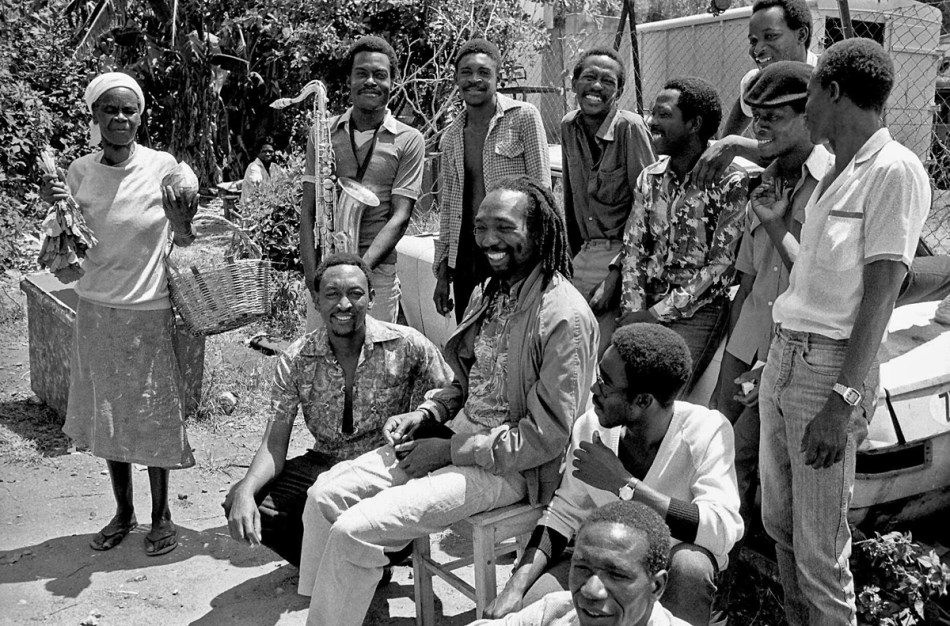
He then founded the Blacks Unlimited around 1978. By then, Chimurenga music had become a symbol of the fight against injustice, as it had become a distinct and menacing presence in war-torn Rhodesia. Through this musical banner, he continued to taunt the colonial regime, denouncing poverty while pleading for freedom. Although the colonial system responded to his music with censorship and repression, Mapfumo’s music irresistibly swept over the nation like a hurricane, as it remained unique, melodious, instructive and just as captivating.
When Zimbabwe became independent in 1980, Mukanya even shared the stage at the celebrations at Rufaro stadium with the Jamaican reggae legend Bob Marley, which opened the doors to international fame and recording opportunities in London.
The post-independence struggle
Looming corruption, crushing poverty and the decay of the rule of law darkened a promising Zimbabwe, saddening hopeful masses and inevitably driving him to compose more texts as protests against his own government. To the surprise of many, the same features of musical censorship as in colonial Rhodesia also struck Mapfumo when the album “Corruption” was released in independent Zimbabwe. With more pressing conditions, in 2000 he settled in the United States and continued his music.
Recognition
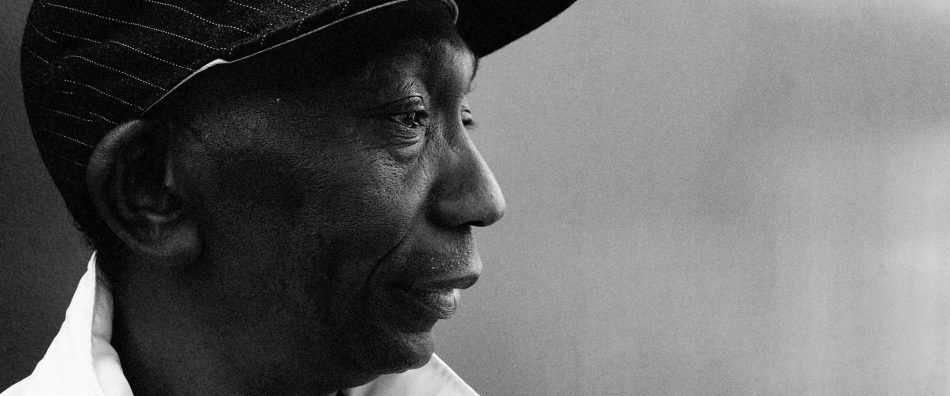
In October 2012, he entered the hall of fame, getting the chance of a lifetime to be invited to perform at the historic Carnegie Hall in New York. This venue, which mainly hosts world-renowned musicians, allowed the Lion of Zimbabwe to receive such recognition because of his historic contributions to the struggle for freedom and social justice in Zimbabwe. After decades of sparkling compilations, Thomas Mapfumo, alias Gandanga (freedom fighter), spearheaded Chimurenga beats through his considerable contributions to the struggle for a united, prosperous and comfortable Zimbabwe. His tireless vivacity in civil rights activism drove him to use his working tools to communicate with the public in song, thanks to a surprisingly constant stamina.
Conclusion

Today, these songs are reissued on CD and are also widely distributed on the internet. Particularly promoted just after independence in 1980, through Robert Mugabe’s desire to create national unity around his person, and notably around his involvement in the second Chimurenga, these songs remain associated with the figure of the president. Yet they have exceeded this field of meaning and belong to a cultural and literary heritage that remains to be transcribed and translated into French, so little are they exploited in the francophone world.
These songs are partly preserved at the National Archives of Zimbabwe, in the “Record Center” section, in versions recorded in Maputo, Mozambique, which were acquired by the archives between 1982 and 1989. Today, some choral variants are available on CD, in shops, and even in reissues of works by particularly renowned singers, such as Thomas Mapfumo, who performed several classics of the Chimurenga songs. In addition, many texts of these songs have been transcribed in Martha Lane’s thesis as well as in Alec Pongweni’s more accessible book, Songs that Won the Liberation War.