
It was at the Curial centre, in the 19th arrondissement of Paris, that we gathered on Tuesday 18 October with the association Ciné SCRED and distinguished guests for the screening of the documentary film “Africa Mia” directed by Richard Minier.

Through the debate built around the history of the group Las Maravillas de Mali and Afro-Latin music, one sees that African cultures have crossed their geographical borders to establish themselves as universal cultures, for which Latin America has been an important receptacle.
Africa has indeed entered history. And it lives on in countless cultures.
Our story begins in the first years of independence. The president of the young Republic of Mali began working on all fronts to develop his country. It is 22 September 1960, and the independence of French Sudan is proclaimed by Modibo Keïta.
The Pan-Africanist schoolteacher then saw the possibility of creating a modern identity for his nation, open to the world. In agreement with Fidel Castro’s Cuban government, the project Las Maravillas de Mali was born.
Richard Minier devoted 17 long years to retracing the steps of the members of the group that so marked the 1960s in Mali.
Most had fallen back into anonymity after a few years of success, and it is in very modest conditions that Richard Minier found some of them. Others, sadly, were no longer of this world when the project began. Richard then had only one obsession: to bring together the remaining members of the famous orchestra so they could play together again.
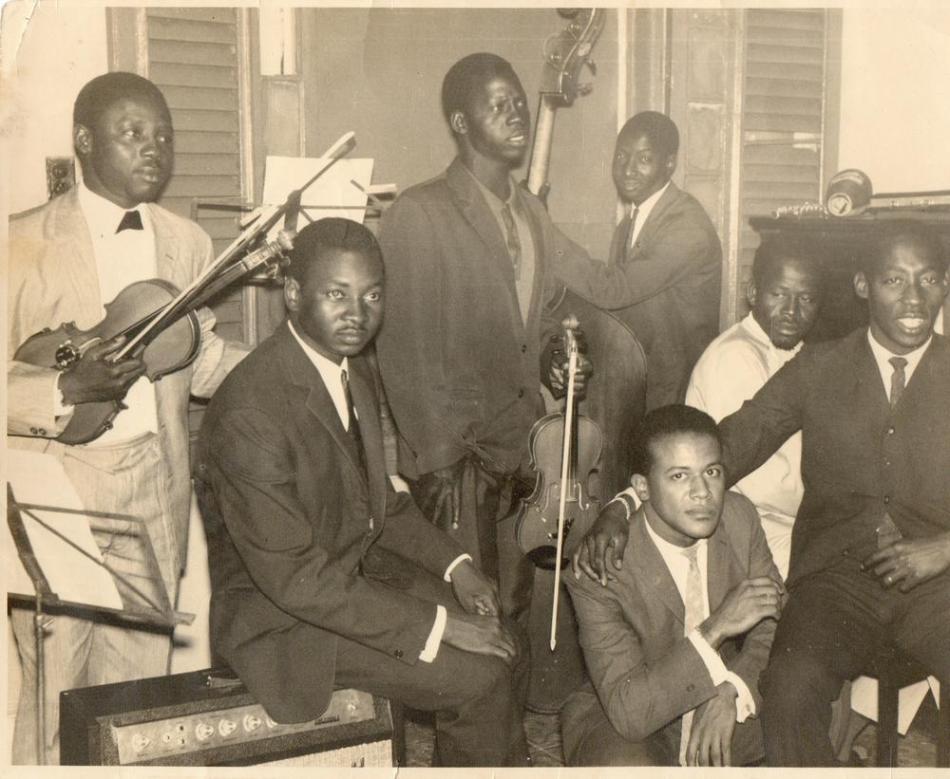
It is through one of them, Dramane Coulibaly, from the Ségou region, that Richard Minier picked up the trail of the forgotten group’s career and thus found the other members. From then on began an emotional roller coaster, 17 years of adventure, hope but also pain and disappointment. Through the eyes of Richard Minier and his team, we follow the harsh trials of life that Bah Tapo, Salif, Dramane, Aliou, Boncana and the others had to face…
This emotion-filled evening was also a way for us to discover the importance and above all the breadth of the ties that unite Africa and Latin America. Beyond a hybridisation of sounds, it is a true spiritual link that unites the two continents.
On stage, it was Alex Munoz Cazieux, the man behind the Ciné SCRED initiative, who led the debate. The talk was skilfully centred on the relations between African and Latin music and on the historical link that unites certain musical currents.
Binkè Traoré, for whom Bah Tapo, one of the members of the group, was a true mentor, gave us a vibrant testimony to the importance these individuals had, both for West African music and for Malian youth. Dramane Coulibaly, for example, offered his services for several years to the INA (Institut National des Arts du Mali) to pass on his musical knowledge to the new generation.

Rodolfo Munoz Ramírez, a percussionist from Peru who had benefited from the same scholarship as Las Maravillas to study music in Cuba, also shared his experience and gave an absolutely brilliant performance on two traditional instruments, the cajón and the quijada, the donkey jawbone.
The debate was also very political and made us realise how considerable a weight the ruling classes can have on cultural diffusion and preservation. Indeed, Las Maravillas de Mali were at the peak of their art and their dazzling success, which seemed to have no limits, gave no hint of so brutal a fall.
Modibo Keïta was arrested and sent to the paratrooper-commando camp of Djicoroni in Bamako. He died there in 1977. The group was then recalled to Mali. For seven months, they suffered one blow after another. No work, no pay. The group began to fall apart.
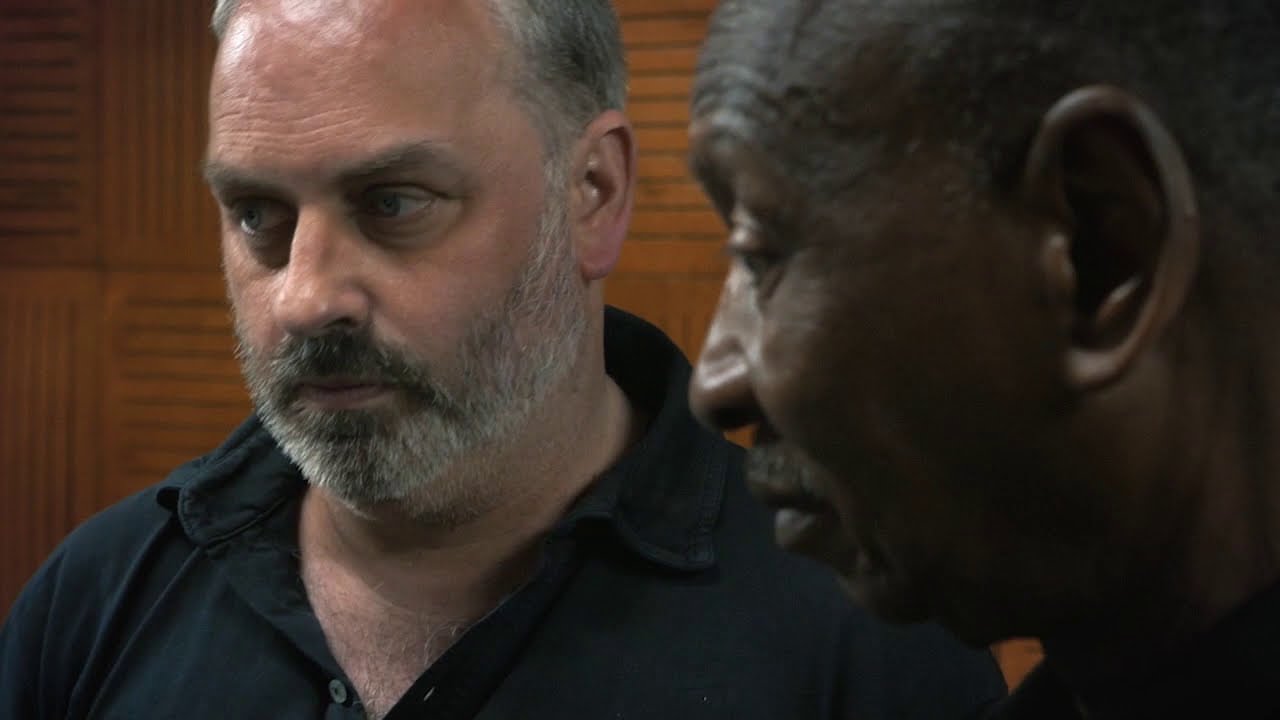
In 2019, Africa Mia, Richard Minier’s film retracing the history of Las Maravillas de Mali, was finally released in cinemas. It was clear at the end of this screening that Boncana Maïga, now in his eighties, felt real regret about the conflicting relations he had had with the rest of the group in the last years of their lives.
Now the sole survivor, he decided, with Richard, with whom he had been very reluctant at the start, to pay a last tribute to his friends from youth. So they headed to Cuba, to the same studio where the group spent hours, even months, making music, to revive the memory of the Maravillas there.
This screening and the whole evening that followed were a real breath of fresh air. The very pertinent questions of Issa Niambele and Alex, the testimonies of the artists and the fine contributions from the audience made us realise more than ever that music is a universal unifying bond, regardless of time and space.