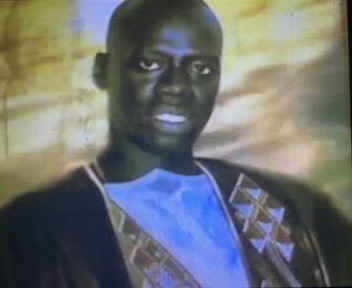
Born on 15 January 1975 in Pikine, Senegal, Ndongo Lô Niang remains an indelible figure in the history of Senegalese music. His life, marked by humble beginnings as a metal welder at the age of 7, quickly turned into a meteoric rise in the world of music.

A child of Pikine
Ndongo Lô grew up in modest conditions, his father hoping he would take up metalwork rather than music. But his early passion for music soon took over. His night-time escapes to sing at kassaks and simbs revealed his exceptional vocal talent, inherited from his maternal grandfather, a singer of praises for Serigne Touba.
Ndongo Lô’s story was marked by an intense family conflict. His father, worried about the potentially negative influences in the world of music, threw the young artist out of the family home. This created a rift between father and son, but also strengthened Ndongo Lô’s determination to pursue his passion despite the obstacles.
The musical rise
Revealed on the music scene in 2000, Ndongo Lô quickly won the hearts of Senegalese music lovers with his first album, “Ndortel”.

His clear, high-pitched soprano voice, his griot-style singing and his knowledge of religious chants made him a revelation of the mbalax scene.
The influence of his home suburb, Pikine, was a recurring theme in Ndongo Lô’s songs. His deep attachment to the town was heightened by the fact that, despite his success, no street in Pikine bears his name. It is a tribute the town owes him, and his absence from the urban landscape is an injustice that fans regret.
Déthié Ndiaye, in his book “La face cachée de Ndongo Lô”, explored little-known aspects of the artist’s life. The book revealed the personal challenges Ndongo Lô faced and helped deepen his fans’ love for him, even twelve years after his death.
A life cut short
Ndongo Lô’s fate was tragically cut short on 17 January 2005, at the age of 30. While giving a concert at the Yengoulène, he suddenly collapsed. Taken to the Casahouss clinic, he died three days later, leaving Senegal in mourning.
Almost 20 years after his death, Ndongo Lô’s songs remain relevant. Their universal themes of life, love and society continue to resonate, and the artist remains immortal through his music.
An immortal legacy
Nineteen years after his passing, the absent one is more present than ever. Birago Diop’s famous line, “the dead are not dead”, resonates in every note of his songs. Ndongo Lô’s works transcend time, leaving an immortal legacy.
The Ndongo Lô Foundation, led by his friend and former manager, Djily Niang, keeps his memory alive through the Ndongo Lô Festival, which celebrates his impact on Senegalese music every end of January.
Despite his impact, it is regrettable that there is no street named after Ndongo Lô in Pikine. His musical legacy is undeniable, but the lack of this physical recognition in his home town remains a gap in his posthumous tribute.
A man attached to his suburb

Ndongo Lô was one of the first artists to proudly embrace his suburban origins. His emblematic song “Galass” celebrated Pikine, his birthplace, and inspired many young artists to embrace their roots.
Ndongo Lô was a pioneer in proudly embracing his “pikinité”, a term that reflects his attachment to the suburb. His influence goes beyond music, inspiring a new generation of artists to embrace their identity and celebrate their origins.
One life, one legacy
Revisiting his works, the relevance of the themes he tackled becomes obvious. Ndongo Lô was more than a musician, he was a storyteller. His songs, steeped in the mbalax atmosphere, dealt with themes such as morality, devotion to Allah, and mutual aid in a society undermined by individualism.

Ndongo Lô’s songs did not merely entertain, they told timeless stories. His talent for capturing everyday life, its joys and sorrows, makes him an artist who transcends generations.
A wise farewell
In his last moments, Ndongo Lô forgave his detractors and expressed his gratitude to those who had supported him. His urgency was to leave a tangible legacy rather than engage in sterile controversy. Posthumous works such as “Fataliku Demb” and “Sey” attest to his artistic genius and his wisdom in the face of fleeting life.
Ndongo Lô’s posthumous works, such as “Fataliku Demb” and “Sey”, add a further dimension to his legacy. These songs, rich in discourse and in the beauty of their lyrics, reveal an artist at the peak of his art even in his final moments.
An eternal tribute
Nineteen years after his departure, Ndongo Lô continues to inspire Senegalese youth. His mastery of the Wolof language, inherited from his griot origins, and his commitment to his culture make him an artist like no other. His legacy lives on in works that remain bedside books for many Senegalese.
Malick Sakho, from Bergamo, Italy, pays tribute to Ndongo Lô by expressing how his music continues to light up our lives. “The true tomb of the dead is the heart of the living,” said Jean Cocteau, and the hearts of the Senegalese forever shelter the artist Ndongo Lô Niang.