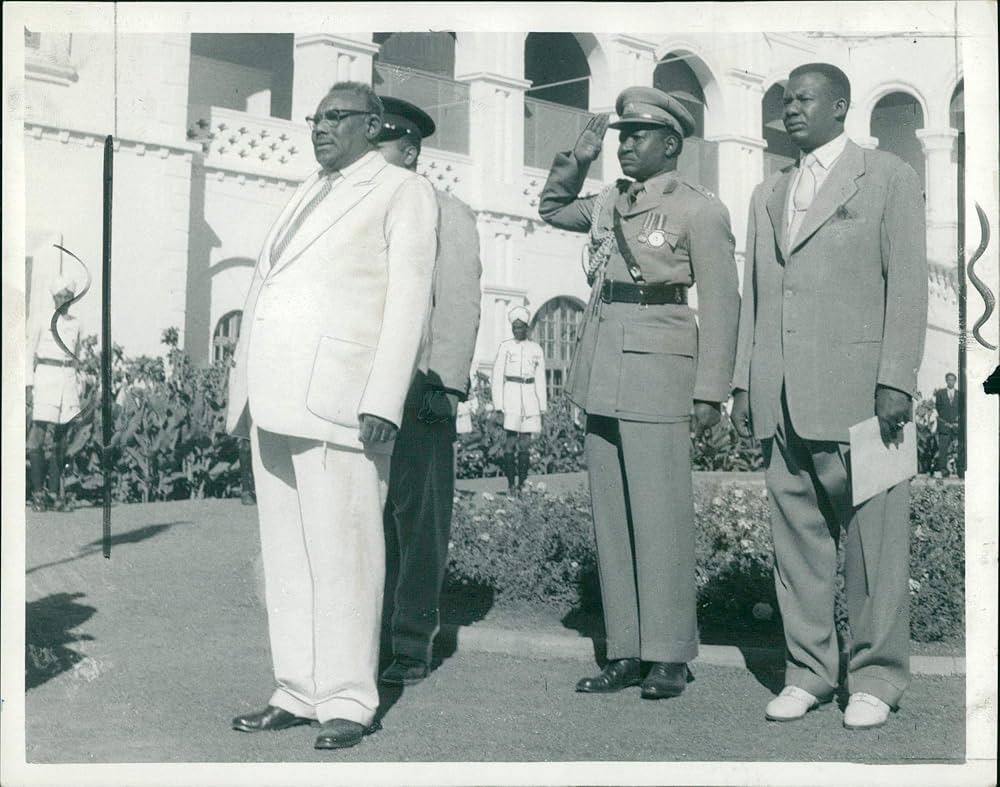
On 1 January 1956, Sudan entered history by becoming the first country in Africa to gain independence after the Second World War. This victory marked the end of the Anglo-Egyptian condominium and the start of a new era for this country of rich cultures and complex stakes.
But behind this symbolic date lie voices, speeches and events that forged modern Sudanese identity. The history of Sudan reveals a universal quest for freedom and self-determination.
The Liberation
The long-awaited day has arrived. On 1 January 1956, the Sudanese Parliament proclaims independence. Ismail al-Azhari, in his historic speech, declares:
“Today, we affirm our unity and our determination to build a better future for all Sudanese, beyond ethnic and religious differences.”
This symbolic moment was not only a political triumph, but also a strong signal for the whole of Africa, announcing a wave of independences to come on the continent.
However, independence was only the beginning of a long road. Sudan, rich in its ethnic, linguistic and religious diversity, faces immense challenges.
The Conflicts
Indeed, from the year before independence, an insurrection broke out in the southern part, which also wanted its own sovereignty. It was in reality a historic war that the new government failed to contain from the very conception of the young state.
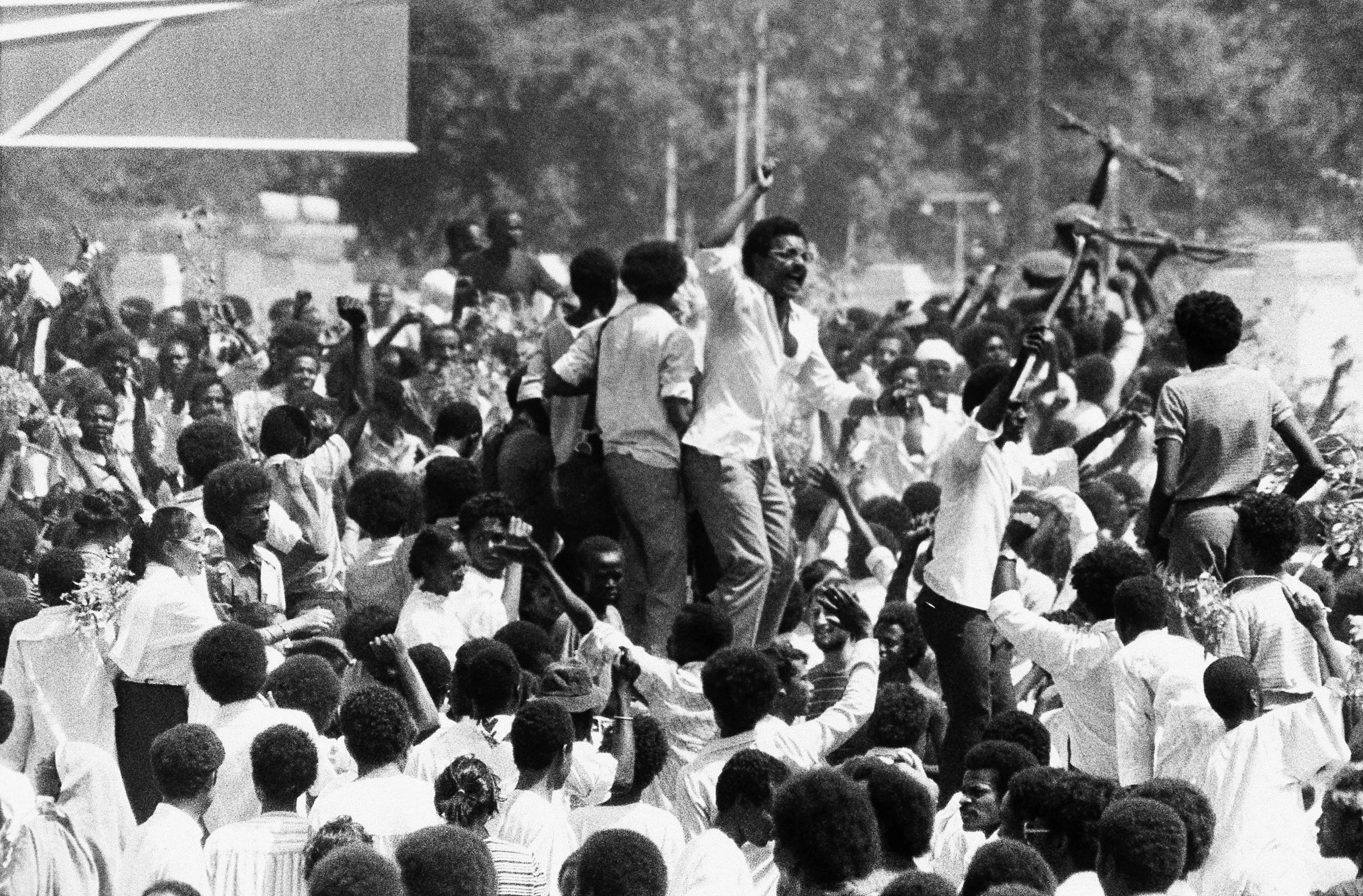
The North, mainly Arab and Islamised, seemed incompatible with the South of the country, populated mostly by Black and Christian populations. The civil war intensified from the mid-1960s, and continued until 1972 when partial autonomy was granted to the South in the Addis Ababa Agreement.
Two other civil wars would follow. The second Sudanese civil war, which broke out in 1983, ended in 2005. The third, beginning in 2003, led to the full independence of South Sudan in 2011 and the fall of President Omar al-Bashir in 2018 but only ended in 2020 with the signing of a peace treaty between most of the belligerents.
Sudan, before the independence of the southern territories, was a gigantic territory of more than 2,500,000 km2, 5 times the size of France. Regional and ethnic tensions rooted in colonial history and the interference of certain statesmen worsened after independence, leading to prolonged conflicts and almost constant political instability.
The Game of Power
Sudan’s long history of coups began from the country’s independence.
Since its inception, the country has seen 5 political overthrows.
The country’s official army, today known as the SAF (Sudanese Armed Forces), has exercised considerable power in the country for nearly a century and used it from the break with Anglo-Egyptian domination.
Abdullah Khalil was the first to use it in 1958. A former military officer and Prime Minister, he overthrew his own civilian government to place Sudan under military rule only two years after taking its lead.
Eleven years later, it was Colonel Jaafar Nimeiry who successfully carried out another coup, ending the short democratic regime of Ismail Al-Azhari, who had come to power in 1965.
In 1985, Nimeiry was in turn overthrown by Abdel Al-Dahab, who helped install a democratically elected government a year later.
In 1989, Colonel Omar Al-Bashir overthrew this same government and proclaimed himself the new head of state.

But the long wars and the systemic violence that marked these periods of political instability intensified under the new president’s rule.
Aware that he could suffer the same fate as his predecessors, Omar al-Bashir was not content with the Sudanese Armed Forces (SAF) to guarantee his protection but equipped himself with other militias to put down the various rebellions taking place in the territory.
Darfur, a western region historically neglected by the central government, would be the stage for massacres orchestrated by the president himself. Bashir armed an Arab militia called the Janjaweed which destroyed 3,000 villages in the region, with no distinction between rebels and civilian populations.
On 19 December 2018, protests broke out in small towns in Sudan, amid an economic crisis, and ended up reaching the country’s capital, Khartoum. These uprisings represented the greatest challenge for Omar al-Bashir, who, throughout his regime, did everything he could to remain in power. In February 2019, the president declared a state of emergency and sacked his cabinet and his regional governors in an attempt to end weeks of protests against his regime, during which up to 40 people died.
Throughout his rule over the country, Mr Bashir relied on different security sectors to avoid being overthrown. However, his plan ultimately failed on 11 April 2019, when the country’s army, the Sudanese Armed Forces, and a paramilitary force, the Rapid Support Forces – created under his own regime – sided with the protesters and carried out a military coup, thus overthrowing Mr Bashir.
Current situation
The end of the Bashir regime brought hope to the protesters, but they remained sceptical about the men who had overthrown him. Abdel Fattah Burhan, of the SAF, and Mohamed Hamdan Dagalo (alias Hemeti), of the RSF, took control of the country after the coup and repeatedly promised to hand power to civilians, which would put Sudan on the path to democracy.
As pro-democracy protests intensified in Khartoum, Hemeti and his forces began to crack down. On 3 June 2019, the RSF killed more than 100 people at a protest sit-in, and further massacres took place across the country.
Subsequently, the United States, Saudi Arabia, the United Arab Emirates, the United Kingdom, Ethiopia and the African Union intervened to help Sudan set out on the path to democracy. They pressured the military and the protesters to accept a power-sharing agreement.
Under this new agreement, representatives of the army and the protesters would be part of a transitional council. According to this plan, the military would control the country for 21 months and civilians for 18 months.
Unfortunately, Abdel Fattah Burhan and Mohamed Hamdan Dagalo were named president and vice-president of the transitional council.
At first, they acted accordingly and installed Abdalla Hamdok as the new prime minister. But after multiple military interventions by these leaders and a staged coup in October 2021, Hamdok resigned in January 2022, probably out of fear for his own safety.
Burhan then became, de facto, the head of Sudan. But Mohamed Hamdan Dagalo (nicknamed Hemedti) claimed power. They ultimately brutally interrupted the Sudanese democratic revolution.
The two men came into conflict, marking the fourth Sudanese civil war, nicknamed the war of the generals. The conflict began on 15 April 2023 and pits the country’s armed forces led by Abdel Fattah (SAF) against the Rapid Support Forces (RSF), under the control of Mohamed Hamdan Dagalo.
Fighting between the forces of the two men began in Khartoum and quickly spread across the country. Recent ceasefire breaches have led to further outbreaks of violence, particularly in Darfur, a region still suffering the consequences of a genocide perpetrated by Mr Bashir’s regime.
In 18 months, the war has killed tens of thousands, displaced more than 12 million people and thus caused a humanitarian crisis of extreme gravity. Sudan is currently the subject of the world’s largest displacement crisis.
Sources:
A Vox video that sums up the starting point of the conflict currently affecting the country. https://www.youtube.com/watch?v=lDfhxMwoyWo
Article by Mat Nashed, an excellent starting point for understanding the current conflict
https://newlinesmag.com/reportage/in-sudan-a-deadly-reckoning-for-rival-forces/
Source for understanding the human damage caused by the conflict https://www.lefigaro.fr/flash-actu/soudan-plus-de-8-millions-de-personnes-sont-au-bord-de-la-famine-selon-un-nouveau-rapport-20241224
Key dates in the history of Sudan