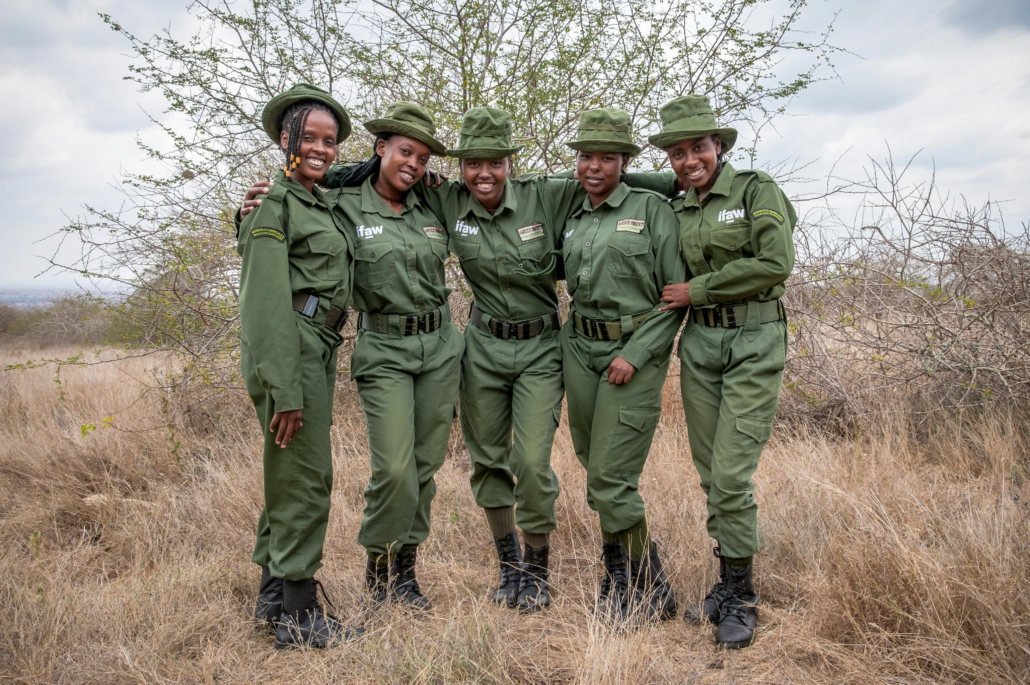
Namibia is home to diverse wildlife, including emblematic species such as the black rhino and the desert elephant. However, poaching and habitat destruction are permanent threats to these animals. That is why Namibian rangers are at the forefront of conservation efforts, tackling both wildlife protection and rural poverty.
Namibia’s women rangers, often from marginalised backgrounds, protect endangered species while earning a sustainable income and gaining skills in anti-poaching and wildlife monitoring. Through community-based conservation programmes, they ensure the involvement of local people and channel the benefits of biodiversity protection to their communities. By promoting gender equality and building economic communities, Namibia’s female rangers show how conservation can be a powerful tool for social and economic development.
Poverty and poaching
Namibia faces significant poverty problems, with about 17.2% of the population living on less than 2.15 dollars a day. In addition, a Gini coefficient of 59.1% makes Namibia one of the most unequal countries in the world, highlighting major disparities in the distribution of wealth, particularly between men and women. In this respect, 46% of female-headed households live in multidimensional poverty, compared with 41% of male-headed households.
Multidimensional poverty affects 43.3% of the country’s population, with rural areas showing much higher rates (59.3%) than urban regions (25.3%). This means that Namibian women living in rural areas suffer most from multidimensional poverty.
This disproportion highlights the intersection of gender and geographic location as key factors of poverty in Namibia.
Moreover, poaching remains a critical problem in Namibia, considerably threatening the country’s wildlife and flora. In 2015, poachers killed 97 rhinos, and 101 elephants in 2016. These were the deadliest poaching years in Namibia’s history. Alka Bhatia, resident representative of the United Nations Development Programme (UNDP) in Namibia, sees the rise in poaching as one of Namibia’s three main challenges, noting that it “deals a blow to the tourism industry and the economy”.

By undermining conservation efforts, poaching also compromises the country’s potential for sustainable economic growth, directly affecting poverty reduction initiatives and the well-being of marginalised communities.
The role of NGOs and women rangers
Several non-governmental organisations (NGOs) in Namibia are tackling the dual challenge of poverty reduction and wildlife and flora conservation by empowering women through employment. These women rangers are making considerable progress not only in conserving wildlife and flora, but also in fighting gender stereotypes and in providing for their families.

The Save the Rhino Trust (SRT) has played a key role in employing women rangers to monitor and protect Namibia’s black rhinos.
This initiative contributes to the preservation of endangered species and offers economic opportunities to women in Namibia’s rural Kunene region. Although initially male-dominated, the programme now has six salaried women. The female rangers employed by SRT learn to recognise rhino tracks, monitor their movements and identify potential poaching threats. The ranger’s role is to contribute to conservation efforts and help reduce poverty for the individual and their family. For Namibian women who are the main breadwinners, this position allows them to support their dependants financially.
Ultimate Safaris, one of the main Namibian tour operators, also works with Huab Under Canvas, a desert camp, to offer unique ecotourism experiences. In partnership with conservation programmes such as SRT, Ultimate Safaris employs female rangers to lead rhino-tracking excursions for tourists. The rangers in this programme are paid to guide tourists on rhino-tracking expeditions, which contributes both to rhino conservation and to the sustainable development of the local economy.
Success rates
Thanks to the support of NGOs and the unwavering determination of women, Namibia has seen a remarkable transformation of men’s and women’s roles within communal conservancies. No longer limited to traditional roles, women now reach leadership positions in various sectors. The 2018 State of Community Conservation report highlights this change. The report reveals that women hold 17% of chairperson positions, 41% of treasurer positions, 33% of management committee member positions and 25% of staff positions in these conservancies.
By employing local women in these roles, wildlife and flora conservancies provide them with stable incomes that can improve their economic situation. Rural communities have gained substantial benefits, with more than 43.5% of Namibian land now managed under conservation. For example, conservancies have helped communities increase their income through wildlife-related activities, such as tourism and sustainable hunting, which has directly supported families, including women.
Furthermore, poaching figures in Namibia have fallen considerably in recent years, a sign of the effectiveness of strengthened conservation efforts. Between 2020 and 2023, the number of rhinos killed fell by more than 50%. The drop is even more striking for elephants, with only eight elephants poached in 2023, in sharp contrast to the 101 killed in 2016. These improvements reflect the efforts of the Namibian government and of women-led nature protection organisations.
Conclusion
Namibia’s women rangers are a ray of hope, as they show how conservation and poverty reduction can go hand in hand. These women are empowering themselves by protecting wildlife and flora, earning sustainable incomes and improving the situation of rural communities.
These initiatives help fight systemic poverty, advance gender equity and support the United Nations Sustainable Development Goals (SDGs), particularly those related to life on land (SDG 15) and gender equality (SDG 5). Ultimately, the efforts of Namibia’s women rangers are a powerful reminder that conservation can be a catalyst for global change.
Source:
Nour Mostafa, a journalist based in Gloucester, United Kingdom, who focuses on good news and global health for the Borgen Project.