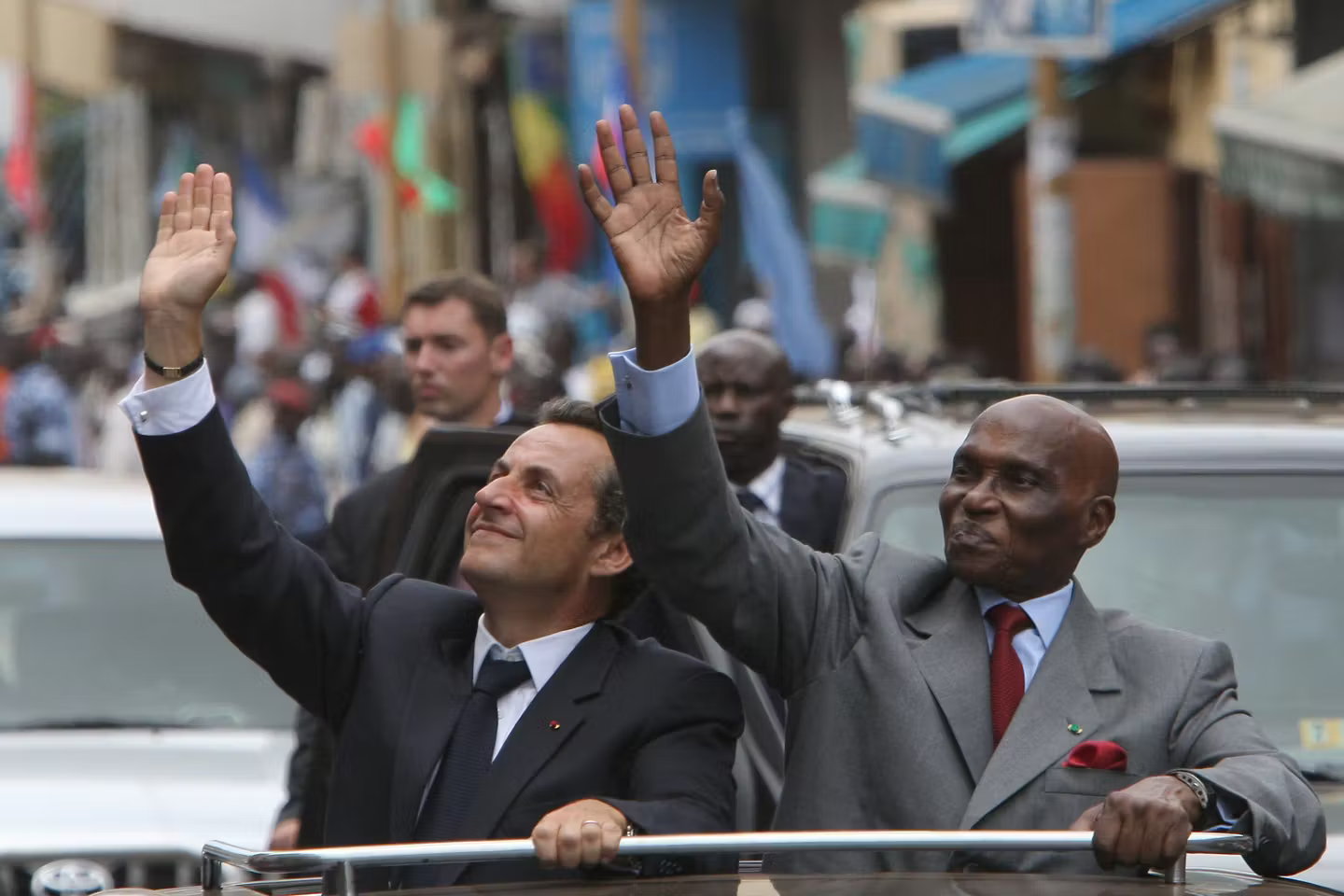
Relations between Africa and the West, between denial and appropriation
Debates over the restitution of works looted during colonisation are back at the centre of the news in France. Parliament has passed a law meant to make it easier to return cultural property illicitly acquired during the colonial period, presented as “a new page” in relations between France and African countries.
Behind the diplomatic questions, this debate raises a deeper one: why did it take so long to recognise the legitimacy of African demands concerning their own heritage? Because returning a work is not only returning an object. It is recognising that it belongs to a history, a memory and a cultural production long downplayed by colonial narratives.
For decades, part of the Western gaze on Africa was built around a persistent idea: that of a frozen continent, without real historicity, outside the universal story of progress. This representation has never completely disappeared. In 2007, in his speech at the Cheikh Anta Diop University in Dakar, Nicolas Sarkozy declared that “the tragedy of Africa is that the African man has not fully entered into history.”

A sentence that immediately sparked a fierce controversy, so much did it seem to reactivate imaginaries inherited from colonial thought.
Almost twenty years later, as the question of restitutions forces France to reconsider the history of colonisation, this speech appears as the symptom of an older narrative: that of an Africa long thought of as a land without archives, without legitimate culture and, in the end, without history.
Sarkozy’s remark rests less on a direct assertion than on a revealing presupposition that goes beyond him alone. By declaring that “the African man” had “not fully entered into history”, he mobilises a certain vision of history while implicitly presenting it as a neutral and universal conception. It is precisely this presupposition that several intellectuals identified and contested: not a sentence Sarkozy explicitly pronounced, but the Eurocentric biases that his wording seems to conceal.
Eurocentrism as an intellectual inheritance
The Dakar speech cannot be understood independently of the history of European ideas.
For several centuries, many Western thinkers built a hierarchical vision of civilisations, placing Europe at the top of a supposedly universal trajectory of progress. In the 19th century, the German philosopher Hegel already described Africa as an “unhistorical” continent, outside the movement of history, while Europe represented the culmination of human civilisation.
The historian Achille Mbembe shows that these representations continue to permeate certain contemporary views. When Sarkozy states that “the African man has not fully entered into history”, the history he refers to in fact corresponds to a historical division that implicitly takes the European experience as the universal norm.

As the historian Catherine Coquery-Vidrovitch points out, Europeans “did not discover Africa, they discovered their Africa”: all knowledge is situated in a historical and cultural context, and the researcher’s gaze necessarily influences the object studied. The Africa described in Western accounts was thus often more an ideological construction than an objective historical reality.
The invention of an Africa “without history”
The controversy it provoked is not only about an isolated sentence, but about a conception of history that, under the appearance of universality, seems to reproduce Eurocentric presuppositions.
This historiographical bias long structured knowledge by imposing categories developed in Europe: the centralised state, writing, urbanisation, linear technical progress. On the basis of these criteria, many researchers concluded that certain African societies did not fit, and then described Africa as a space without a history of its own.

This intellectual mechanism served as the foundation for several pseudo-scientific theories, among them “Hamitism”, according to which the great African achievements must necessarily have been brought from outside. Everything that testified to political or cultural sophistication was systematically disconnected from the African populations themselves, who were thought of as primitive.
This reading fulfilled a precise ideological function: by denying Africans any autonomous historical capacity, it legitimised colonial domination. The colonial enterprise was not content with occupying territories. It also produced a story of the world in which Europe appeared as the bearer of civilisation facing supposedly immature peoples.
It is precisely against this historical dispossession that several African intellectuals rose up in the 20th century. Among them, Cheikh Anta Diop, the Senegalese historian and anthropologist, devoted his work to demonstrating the antiquity and complexity of African civilisations, notably helping to re-anchor ancient Egypt in the history of the continent. The very place of Sarkozy‘s speech thus took on a particular symbolic dimension: he spoke in a university bearing the name of an intellectual who had devoted his life precisely to deconstructing this type of prejudice.
The debate over sources
The idea of an Africa “without history” also rests on a restrictive conception of historical sources. For a long time, an equation held sway in Western historiography: no writing, no history. Yet this view made invisible societies whose forms of knowledge transmission did not match European standards. In several African regions, historical memory was transmitted orally for centuries, through griots, genealogists and storytellers.
The historian Jan Vansina contributed greatly to having oral tradition recognised as a true historical source, showing that African societies had developed extremely codified methods of transmitting memory. The African historian Joseph Ki-Zerbo also argued for a “total history” integrating written, archaeological, linguistic and oral sources, not to replace writing with orality, but to move beyond a hierarchy of knowledge inherited from the colonisers.
A long history of writing in Africa
Reducing Africa to a “civilisation of orality” would, however, be just as simplistic. Because, contrary to a widespread idea, the continent has ancient and diverse written traditions. Africa writes, and has written for a long time. While oral tradition has long been a major source for African history, it would be reductive to make it an exclusive feature of the continent in opposition to a Europe supposedly founded on writing.

The best-known example remains ancient Egypt, one of the great cradles of writing in world history. But the written history of the continent does not stop there: between the 13th and 16th centuries, the manuscripts of Timbuktu bear witness to intense intellectual activity in West Africa, with thousands of texts devoted to law, theology, astronomy and mathematics. The continent also has several writing systems of its own, such as Ge’ez in Ethiopia, Tifinagh among the Tuareg and Nsibidi in West Africa.
The relative scarcity of certain archives is further explained by concrete historical factors: destruction linked to colonisation, looting, conflicts or unfavourable climatic conditions. As Achille Mbembe points out, the erasure of traces is itself part of mechanisms of symbolic domination: once archives are destroyed or made invisible, their absence ends up being used as proof that nothing existed before.

Recognition, a still-current issue
Almost twenty years after the Dakar speech, the controversies it provoked remain deeply current. Deconstructing Eurocentric biases is not only an academic debate: it is also a political and symbolic issue, that of recognising the plurality of historical trajectories.
The work accumulated over half a century has largely demonstrated the antiquity and diversity of African societies. Africa does not have to “enter history”: it has always been in it.
The current debates around the restitution of looted works show that this recognition remains, even today, deeply unfinished.
References
- Achille Mbembe, Sortir de la grande nuit. Essai sur l’Afrique décolonisée, La Découverte, 2010.
- Cheikh Anta Diop, Nations nègres et culture, Présence Africaine, 1954.
- Catherine Coquery-Vidrovitch, Petite histoire de l’Afrique, La Découverte, 2011.
- Joseph Ki-Zerbo, Histoire de l’Afrique noire, Hatier, 1972.
- Jan Vansina, La tradition orale, Karthala, 1985.
- Adame Ba Konaré (dir.), Petit précis de remise à niveau sur l’histoire africaine à l’usage du président Sarkozy, La Découverte, 2008.
- John Hunwick, work on the Timbuktu manuscripts.